


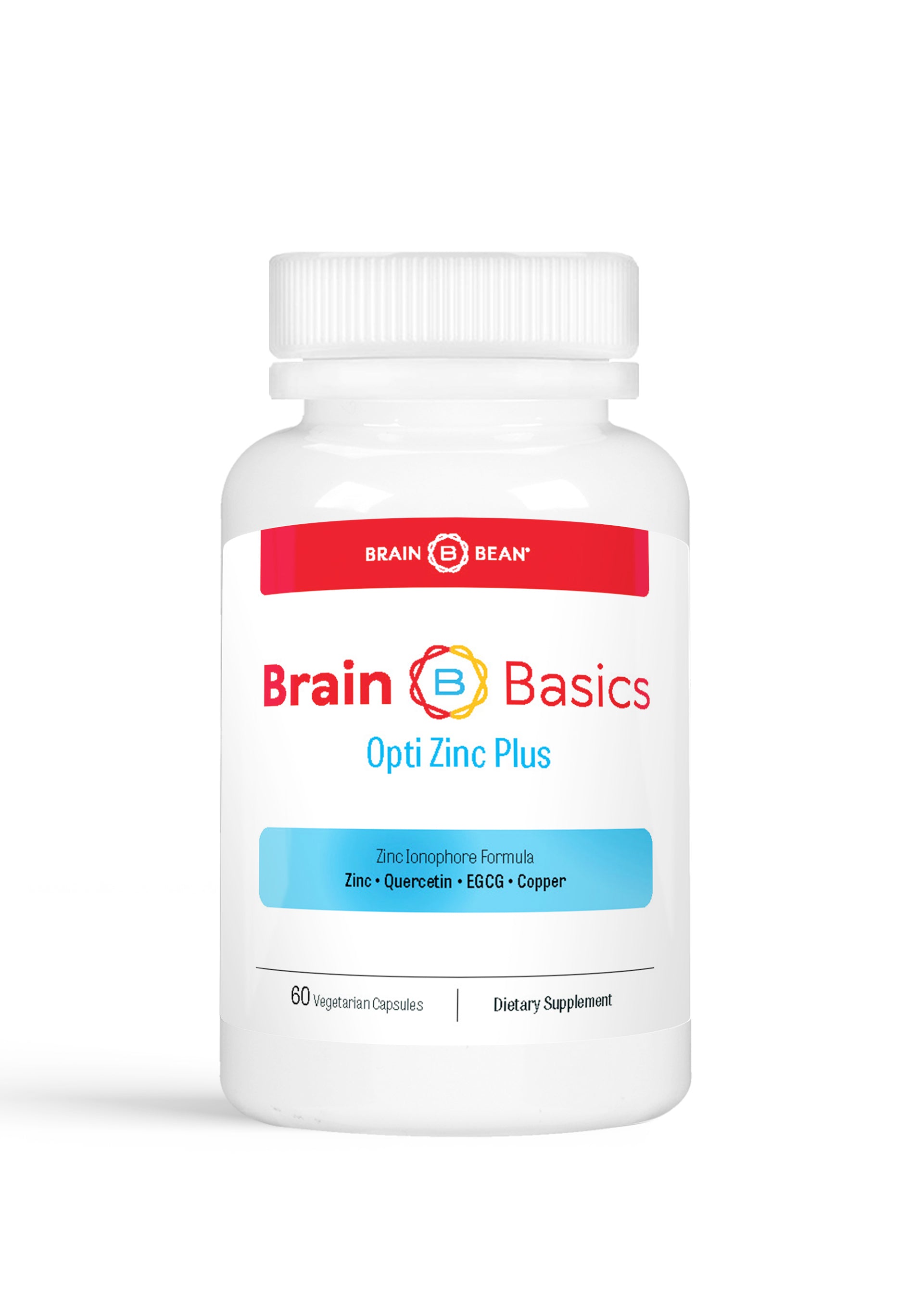
Brain Basics - Opti Zinc Plus™ - Most Absorbable Zinc Formula Available, for Fast Effective Results
Bundle & Save!
Buy 2 get 10% off, Buy 3 get 15% off

Getting zinc into your body is only half the job. Opti Zinc Plus™ is designed to help carry it into your cells, where it matters most, for your immune system, brain and MOOD · MIND · MEMORY.
Zinc is your body's most abundant intracellular trace mineral, involved in more than 2,000 cellular processes that support immunity, brain function, metabolism, vision, taste, smell and more. But there's a catch: zinc is a charged ion, and it doesn't pass easily through cell membranes on its own. Opti Zinc Plus solves that with a smart, three-part approach: a highly absorbable patented zinc chelate, plus two natural zinc ionophores, EGCG from green tea and quercetin, that help transport zinc into your cells. And unlike many zinc-only supplements, it includes 1 mg of chelated copper to keep your zinc and copper in healthy balance.
Why you'll love Opti Zinc Plus
- Supports cellular zinc uptake with two natural ionophores, EGCG and quercetin
- Supports a strong, healthy immune system
- Supports brain health, memory and mood
- Highly absorbable: 25 mg of zinc as a gentle, patented bisglycinate chelate
- Balanced formula: includes 1 mg of copper to help maintain a healthy zinc-to-copper balance
- Antioxidant support from green tea extract and quercetin
- One capsule a day, 60 capsules per bottle
Zinc: the mineral behind more than 2,000 cellular processes
Few nutrients touch as many parts of your biology as zinc. More than 300 enzymes need zinc to function, and it works with over 2,000 transcription factors, the proteins that switch your genes on and off. That puts zinc at the center of thousands of reactions happening in your cells every second, including:*
- DNA repair and cell renewal: building, copying and protecting your genetic material as cells divide and repair themselves.*
- Protein synthesis: making the proteins that build muscle, skin, hormones and enzymes.*
- Immune signaling: developing and activating T cells and coordinating a balanced immune response.*
- Brain chemistry: regulating communication between nerve cells in memory and mood centers.*
- Antioxidant defense: powering superoxide dismutase (SOD), one of the body's primary defenses against oxidative stress.*
- Metabolism and hormones: supporting insulin, thyroid and testosterone function.*
Who is running low on zinc
Your body has no dedicated storage system for zinc, so you need a steady supply every day. Yet modern diets make that harder than ever:
- Depleted soils: Intensive farming has lowered zinc levels in many soils, and crops grown in them carry less zinc to your plate.
- Processed foods: Refining grains strips away much of their natural zinc.
- Absorption blockers: Phytates in grains, legumes and plant-based diets bind zinc and reduce how much you absorb.
- Common medications: Acid-reducing drugs (PPIs), diuretics and certain antibiotics can lower zinc absorption or increase its loss.
- Stress, sweat and alcohol: All increase the body's zinc losses.
Worldwide, an estimated 1 in 6 people is at risk of inadequate zinc intake. And while the typical American diet of meat, seafood, dairy and fortified cereals covers the basics for many younger adults, certain groups are highly vulnerable to low or marginal zinc status:
- Adults over 70: Up to 40% of older adults may not get enough zinc, due to smaller appetites, lower stomach acid and medications that block absorption.
- Vegetarians and vegans: Phytates in plant foods bind zinc in the gut and sharply reduce absorption, so the NIH notes that vegetarians may need up to 50% more zinc than meat-eaters.
- People with digestive conditions: Those with Crohn's disease, celiac disease or a history of bariatric surgery often absorb nutrients less efficiently, leading to chronic depletion.
- Regular alcohol drinkers: Alcohol reduces zinc absorption in the gut and greatly increases its loss through the urine.
The hidden gap: Blood tests flag a true zinc deficiency in only about 8% of Americans. But blood zinc is a poor measure of what's happening inside your cells, because the body tightly holds blood levels steady, even pulling zinc from tissues to do it. As the Journal of Neuroscience research showed, blood zinc can look normal while the body's zinc stores are falling. Marginal, "subclinical" zinc status can go undetected for years.
A perfect storm with age
As we age, the need for zinc goes up just as our ability to get it goes down. Zinc absorption declines with age, appetite and food variety often shrink, and medication use rises. At the same time, the immune system naturally becomes less efficient and more prone to chronic, low-grade inflammation, sometimes called "inflammaging." Zinc is essential for keeping that immune response strong but balanced. Low intake combined with rising need is a problem waiting to happen, and it often goes unnoticed because standard blood tests can look normal even when cellular zinc is low. Opti Zinc Plus is designed to close that gap: well-absorbed chelated zinc, plus two natural ionophores to help deliver it into your cells.*
Ionophores: the key that unlocks your cells
The word ionophore literally means "ion carrier." Zinc circulates in your bloodstream, but to do most of its work it needs to get inside your cells, and as a charged mineral it can't simply slip through the cell membrane. Ionophores act like a shuttle, binding to zinc and helping carry it across the membrane into the cell. Research shows that both EGCG, the signature polyphenol in green tea, and quercetin, a flavonoid found in onions, apples and berries, act as natural zinc ionophores. Pairing them with a highly absorbable zinc chelate is what sets Opti Zinc Plus apart from ordinary zinc supplements.
Why getting zinc inside the cell matters
Zinc carries a positive charge, so it can't pass through the fatty outer membrane of a cell on its own. Normally your cells depend on specialized zinc transporter proteins to let zinc in, and those transporters can become a bottleneck, especially when your immune system is under high demand and your cells need zinc the most. Ionophores give zinc a second way in. Quercetin binds to zinc and forms a complex that is fat-soluble enough to pass through the cell membrane. Once inside, it releases the zinc right where it's needed. The result is more zinc inside your cells, without relying only on the body's slower native transport pathways.*
A two-step delivery system
- Step 1, into your bloodstream: Zinc bisglycinate is zinc bound to the amino acid glycine. This gentle chelated form is well absorbed through the gut and easy on the stomach.
- Step 2, into your cells: Quercetin and EGCG act as natural ionophores, shuttling zinc across the cell membrane to where it does its work.
Most zinc supplements stop at step 1. Opti Zinc Plus is formulated to complete the journey.
Two ionophores, backed by landmark research
A landmark 2014 study published in the Journal of Agricultural and Food Chemistry demonstrated that EGCG and quercetin can rapidly transport zinc across cell membranes.
- Proven in living cells: In liver cells, both EGCG and quercetin significantly increased the amount of zinc inside the cell.
- Proven without any cell machinery: To confirm the effect didn't depend on the cell's own zinc transporters, researchers tested it on artificial liposomes. These are simple lipid bilayers that mimic a cell membrane but contain no cellular proteins at all. Adding EGCG or quercetin with zinc triggered a rapid influx of zinc into these lipid systems. This demonstrated true ionophore activity: EGCG and quercetin carry zinc through the membrane themselves.
- Confirmed by a 2025 systematic review: A review published in Biomolecules confirmed that quercetin raises zinc concentrations inside cells.
How EGCG and quercetin carry zinc
EGCG and quercetin are rich in phenolic hydroxyl groups, natural chemical "hands" that are excellent at grabbing onto metal ions. They bind to the zinc ion (Zn²⁺) and wrap around it, shielding its electrical charge. This turns the zinc into a fat-soluble complex that can slip straight through the lipid bilayer of a cell and release its zinc on the inside.
Why our two-step design matters
Research shows that EGCG works best at the cellular level, shuttling zinc into target cells such as immune and liver cells. On its own, however, it does not significantly boost how much zinc is absorbed from the gut into the bloodstream. That's exactly why Opti Zinc Plus doesn't rely on ionophores alone:
- Zinc bisglycinate gets zinc efficiently absorbed from the gut into your bloodstream.
- EGCG and quercetin then carry that zinc into your cells.
Each ingredient does the job it does best, so zinc gets absorbed and delivered.
Effective and safe: natural vs. synthetic ionophores
Not all ionophores are created equal. Synthetic ionophores such as pyrithione and clioquinol are highly potent zinc carriers, but they can carry cellular toxicity, which makes them unsuitable for regular use. EGCG and quercetin are natural plant flavonoids that people have consumed safely for generations in foods like green tea, onions, apples and berries. They move zinc into cells in a steady, gentle way that works with your body's natural balance rather than overwhelming it. That makes them far safer for everyday use and ideal for a daily zinc formula.*
More than a shuttle
Quercetin and EGCG don't just deliver zinc. They bring powerful benefits of their own that work hand in hand with it:*
- Antioxidant protection: Both quercetin and EGCG help neutralize free radicals and reduce oxidative stress in immune and brain cells.*
- A balanced inflammatory response: Quercetin helps calm NF-κB signaling, one of the body's key inflammation pathways, supporting healthy levels of inflammatory messengers such as IL-6 and TNF-α.*
- Seasonal comfort: Quercetin helps stabilize mast cells, the cells that release histamine, supporting respiratory and seasonal wellness.*
- A smarter immune response: Together, zinc and quercetin support an immune system that responds effectively without overreacting.*
Balanced with copper, the way zinc should be
Zinc and copper are partners that compete with each other. They share the same absorption pathways in the gut, so taking zinc on its own day after day can gradually push copper levels down. Many zinc-only supplements ignore this. Over time that can create a new imbalance while you're fixing another. Opti Zinc Plus is built to prevent it.
- 1 mg of copper in every capsule: That's more than 100% of the recommended daily amount for adults (0.9 mg). It's provided as copper bisglycinate, the same gentle, well-absorbed chelated form we use for zinc.
- How zinc lowers copper: Zinc prompts the gut lining to produce a protein called metallothionein, which traps copper and prevents it from being absorbed. Pairing zinc with copper helps keep both minerals where they should be.*
- The balance works both ways: Too little zinc allows copper to build up to harmful levels, and too much zinc without copper can leave you short. Opti Zinc Plus supplies both, so you're supporting balance rather than trading one problem for another.*
Why copper matters for your brain and body
- Antioxidant teamwork: Your body's main antioxidant enzyme inside cells, copper-zinc superoxide dismutase (Cu/Zn SOD), needs both minerals to work.*
- Brain chemistry: Copper helps convert dopamine into norepinephrine, a key neurotransmitter for focus and alertness, and supports the myelin that insulates nerve fibers.*
- Energy production: Copper is essential for the enzymes in your mitochondria that turn food into cellular energy.*
- Healthy blood and iron use: Copper helps your body use iron to form healthy red blood cells.*
- Strong connective tissue: Copper helps build the collagen and elastin that support skin, blood vessels and joints.*
Zinc and your brain
- Memory and learning: Zinc is highly concentrated in the hippocampus, the brain's memory center, where it helps regulate communication between nerve cells.
- Mood and stress response: Zinc plays a role in neurotransmitter signaling and supports a healthy response to everyday stress.
- Brain defenses: Zinc is a key component of superoxide dismutase (SOD), one of the body's most important antioxidant enzymes, helping protect brain cells from oxidative stress.
- Brain-immune connection: A healthy immune response supports a healthy brain, and zinc is essential for both.
The zinc and dementia connection
Low zinc levels in the blood are linked to a 34% higher risk of new-onset dementia, and the risk climbs even higher as deficiency becomes more severe.
- Higher risk: A large-scale retrospective study found that zinc deficiency (serum zinc below 70 µg/dL) was independently associated with a 34% increased risk of developing dementia within three years.
- Dose-response: The risk grows as deficiency worsens. Mild-to-moderate deficiency (50–70 µg/dL) was linked to a 26% higher risk, while severe deficiency (below 50 µg/dL) was linked to a 71–72% higher risk.
- Brain health: Zinc is an essential trace element that helps form memories, supports communication between nerve cells and helps protect the brain from oxidative stress.*
Why low zinc harms the brain
- Inflammation: A lack of zinc activates inflammatory pathways, such as the NLRP3 inflammasome, that are associated with cognitive decline.
- The copper balance: Zinc and copper act as antagonists in the body. Without enough zinc, copper can build up to harmful levels, which is also linked to brain damage and dementia risk. That's why Opti Zinc Plus includes a small, balanced 1 mg of copper alongside its zinc.
- Cell disruption: Low zinc disrupts neurotransmitter balance, including glutamate, and compromises brain cell function.
What the research in The Journal of Neuroscience found
A 2021 study published in The Journal of Neuroscience looked at the zinc–brain connection from two angles: human data and a controlled animal model.
- In people: Data from the Alzheimer's Disease Neuroimaging Initiative (ADNI) showed that zinc supplementation was associated with a lower risk and significantly slower cognitive decline in people with mild cognitive impairment and Alzheimer's disease.
- Memory loss sped up with low zinc: In an Alzheimer's-model mouse, a zinc-deficient diet accelerated memory loss on both spatial memory (Y-maze) and novel smell recognition tests.
- Not plaque, inflammation: Low zinc worsened memory without changing amyloid plaque levels. The driver was inflammation. Zinc deficiency supercharged the NLRP3 inflammasome, one of the body's master switches for inflammation, in immune cells and in microglia, the brain's own immune cells. Adequate zinc calmed NLRP3 activation, and mice without NLRP3 were protected from the zinc-related decline.
- A hidden deficiency: Blood (plasma) zinc stayed normal even as zinc stores in the body dropped and memory declined. A "normal" blood test doesn't always mean you're getting enough.
- Reversible: When zinc-deficient animals were switched back to a normal-zinc diet, their memory performance recovered.
The researchers note that zinc deficiency is the most common nutritional deficiency in the world, and it is especially common in older adults. They concluded that zinc status is linked to inflammatory reactivity in the brain and that zinc supplementation could help slow the rate of cognitive decline.
Zinc and your immune system
Zinc is one of the most important nutrients for a healthy immune response. It supports the development and function of immune cells, including T cells, and helps maintain the integrity of your skin and mucous membranes, your body's first line of defense. Even a modest shortfall in zinc can affect how well your immune system works, which is why maintaining healthy cellular zinc status matters year-round.
Zinc and healthy hormone balance
Zinc is one of the most important minerals for healthy hormone production and signaling in both men and women. The receptors that respond to testosterone, estrogen, progesterone and thyroid hormone all rely on zinc-containing structures, called "zinc fingers," to bind DNA and carry out their instructions. Without enough zinc, hormones can't do their jobs as effectively.*
Zinc and testosterone
- Low zinc, low testosterone: In a study published in Nutrition, healthy young men placed on a zinc-restricted diet for 20 weeks saw their testosterone levels drop dramatically, from about 40 to about 11 nmol/L.
- Restoring zinc, restoring testosterone: In the same research, older men with marginal zinc status who took zinc for 6 months nearly doubled their testosterone levels, from about 8 to 16 nmol/L.
- Signal to production: Zinc supports the pituitary's release of luteinizing hormone (LH), the signal that tells the body to make testosterone.*
- Active lifestyles: Intense exercise increases zinc losses through sweat. Research in athletes suggests zinc helps maintain healthy testosterone and thyroid hormone levels during heavy training.*
- Prostate and reproductive health: The prostate holds one of the highest concentrations of zinc in the body, and zinc is essential for healthy sperm production, quality and motility.*
Zinc and whole-body hormone health
- Thyroid: Zinc is needed to make thyrotropin-releasing hormone (TRH), which signals the thyroid to produce its hormones, and it helps convert the inactive thyroid hormone T4 into the active form, T3, supporting healthy energy and metabolism.*
- Women's hormones: Zinc supports healthy ovulation, egg maturation and a healthy menstrual cycle.*
- Insulin: Your pancreas stores insulin bound to zinc, and zinc supports healthy insulin signaling and blood sugar balance.*
- Growth and repair: Zinc supports healthy growth hormone and IGF-1 activity, key drivers of tissue repair and lean muscle.*
Because zinc status tends to decline with age, just as hormone levels naturally start to fall, keeping zinc levels optimal is a simple, foundational step for supporting vitality, strength and drive as you get older.*
Whole-body benefits
Beyond immunity, brain health and hormones, zinc supports:
- Healthy vision, taste and smell
- Clear, healthy skin and wound healing
- Healthy hair and nails
- Strong bones
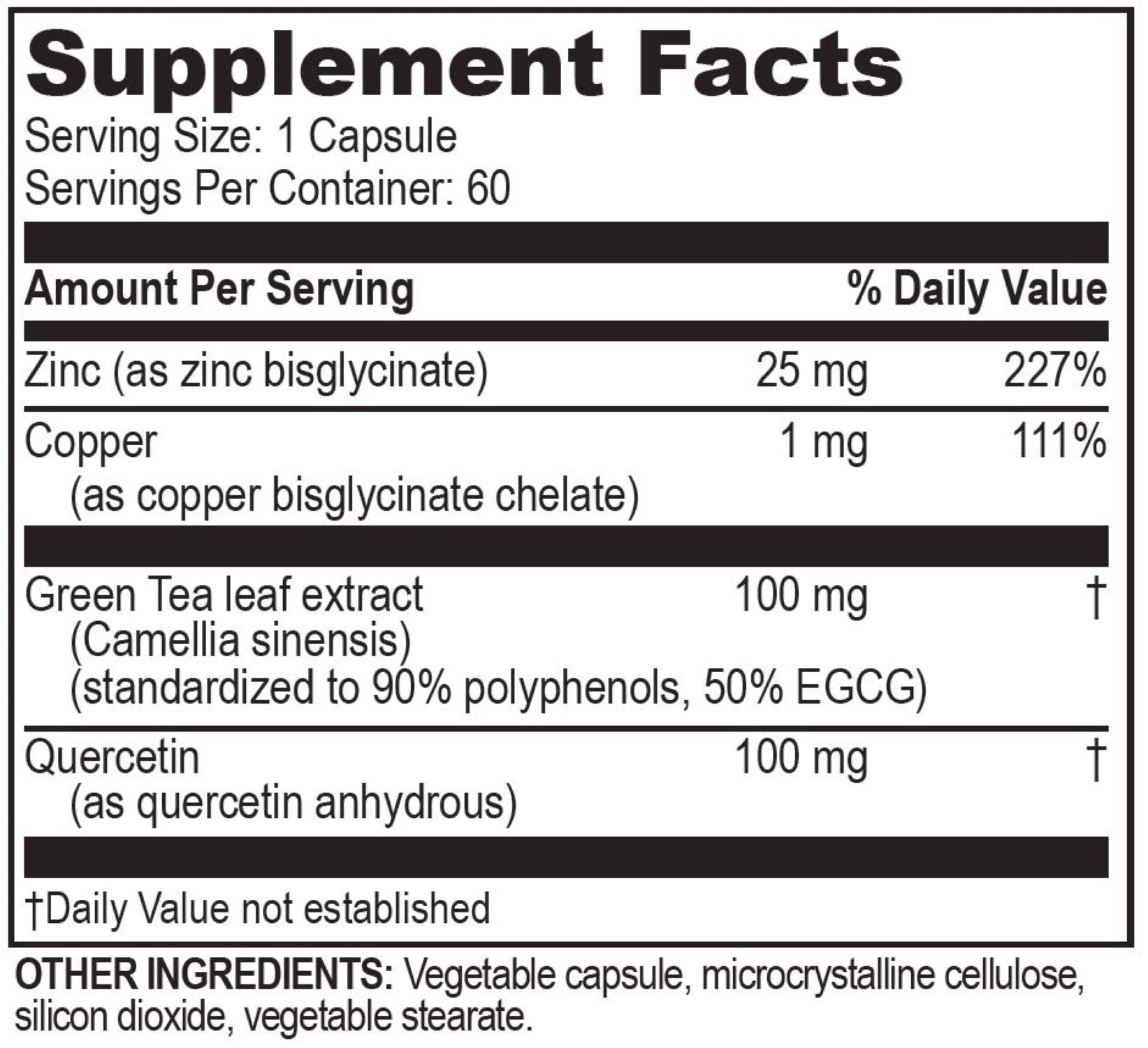
What's inside (per capsule)
- Zinc (as zinc bisglycinate), 25 mg: a patented, highly absorbable chelated form that is gentle on the stomach
- Copper (as copper bisglycinate chelate), 1 mg: helps maintain a healthy balance with zinc
- Green tea leaf extract (Camellia sinensis), 100 mg: standardized to 90% polyphenols and 50% EGCG, a natural zinc ionophore
- Quercetin (as quercetin anhydrous), 100 mg: a natural zinc ionophore and antioxidant flavonoid
Other ingredients: vegetable capsule, microcrystalline cellulose, silicon dioxide, vegetable stearate.
How to use
Take 1 capsule daily, or as directed by your healthcare practitioner. Each bottle contains 60 capsules.
Quality you can trust
Opti Zinc Plus is made in the USA in a GMP-certified, FDA-registered facility and is lab-tested for purity and potency.
Frequently asked questions
What makes Opti Zinc Plus different from regular zinc?
Most zinc supplements only deliver zinc to your bloodstream. Opti Zinc Plus combines a highly absorbable zinc chelate with two natural ionophores, EGCG and quercetin, that help carry zinc into your cells, where it does its work.
Why does it contain copper?
Zinc and copper compete for absorption, so taking zinc on its own over time can lower your copper levels. Every capsule includes 1 mg of chelated copper, more than 100% of the daily recommended amount, to keep the two minerals in healthy balance. Copper also works alongside zinc in key antioxidant enzymes, brain chemistry and energy production.
What is zinc bisglycinate?
It's zinc bound to the amino acid glycine. This chelated form is well absorbed and gentle on the stomach compared with inexpensive forms like zinc oxide.
Can I take it with other Brain Bean products?
Yes. Opti Zinc Plus pairs well with Opti D3 Plus and Ultra-Pure Selenomethionine for complete immune and brain support.
Scientific references
- Huang SH, Weng HL, Hung KC, et al. Association of zinc deficiency and risk of new-onset dementia: a retrospective cohort study. Frontiers in Nutrition. 2025;12:1666887. doi.org/10.3389/fnut.2025.1666887
- Rivers-Auty J, Tapia VS, White CS, et al. Zinc Status Alters Alzheimer's Disease Progression through NLRP3-Dependent Inflammation. The Journal of Neuroscience. 2021;41(13):3025-3038. doi.org/10.1523/JNEUROSCI.1980-20.2020
- Szewczyk B. Zinc homeostasis and neurodegenerative disorders. Frontiers in Aging Neuroscience. 2013;5. doi.org/10.3389/fnagi.2013.00033
- Dabbagh-Bazarbachi H, Clergeaud G, Quesada IM, et al. Zinc Ionophore Activity of Quercetin and Epigallocatechin-gallate: From Hepa 1-6 Cells to a Liposome Model. Journal of Agricultural and Food Chemistry. 2014;62(32):8085-8093. doi.org/10.1021/jf5014633
- Alharbi HOA, Alshebremi M, Babiker AY, et al. The Role of Quercetin, a Flavonoid in the Management of Pathogenesis Through Regulation of Oxidative Stress, Inflammation, and Biological Activities. Biomolecules. 2025;15(1):151. doi.org/10.3390/biom15010151
- Wessells KR, Brown KH. Estimating the Global Prevalence of Zinc Deficiency: Results Based on Zinc Availability in National Food Supplies and the Prevalence of Stunting. PLoS ONE. 2012;7(11):e50568. doi.org/10.1371/journal.pone.0050568
- National Institutes of Health, Office of Dietary Supplements. Zinc fact sheet for health professionals. ods.od.nih.gov/factsheets/Zinc-HealthProfessional/
- Prasad AS, Mantzoros CS, Beck FWJ, et al. Zinc status and serum testosterone levels of healthy adults. Nutrition. 1996;12(5):344-348. doi.org/10.1016/S0899-9007(96)80058-X
- Kilic M, Baltaci AK, Gunay M, et al. The effect of exhaustion exercise on thyroid hormones and testosterone levels of elite athletes receiving oral zinc. Neuro Endocrinology Letters. 2006;27(1-2):247–252.
*These statements have not been evaluated by the Food and Drug Administration. This product is not intended to diagnose, treat, cure, or prevent any disease.


Build your brain, better your life.

Physician Formulas Backed by Science

Sugar, Dairy, and Gluten-Free Options
